NeRFBerg
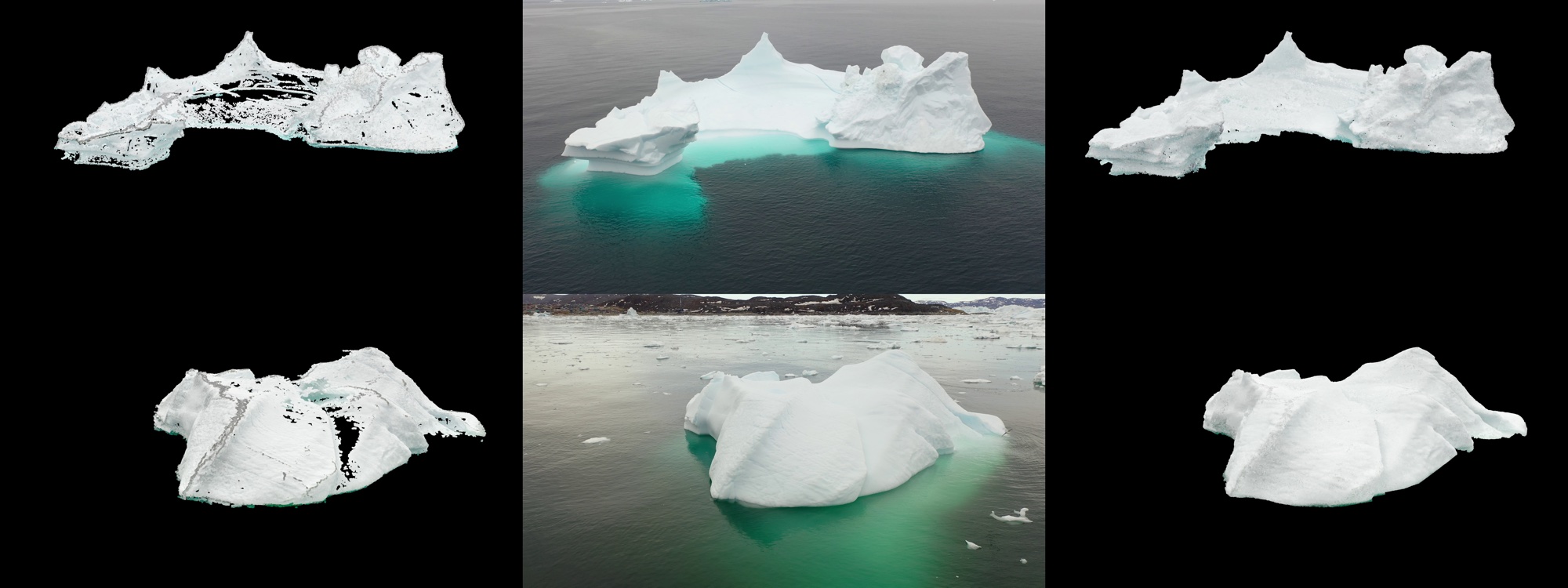
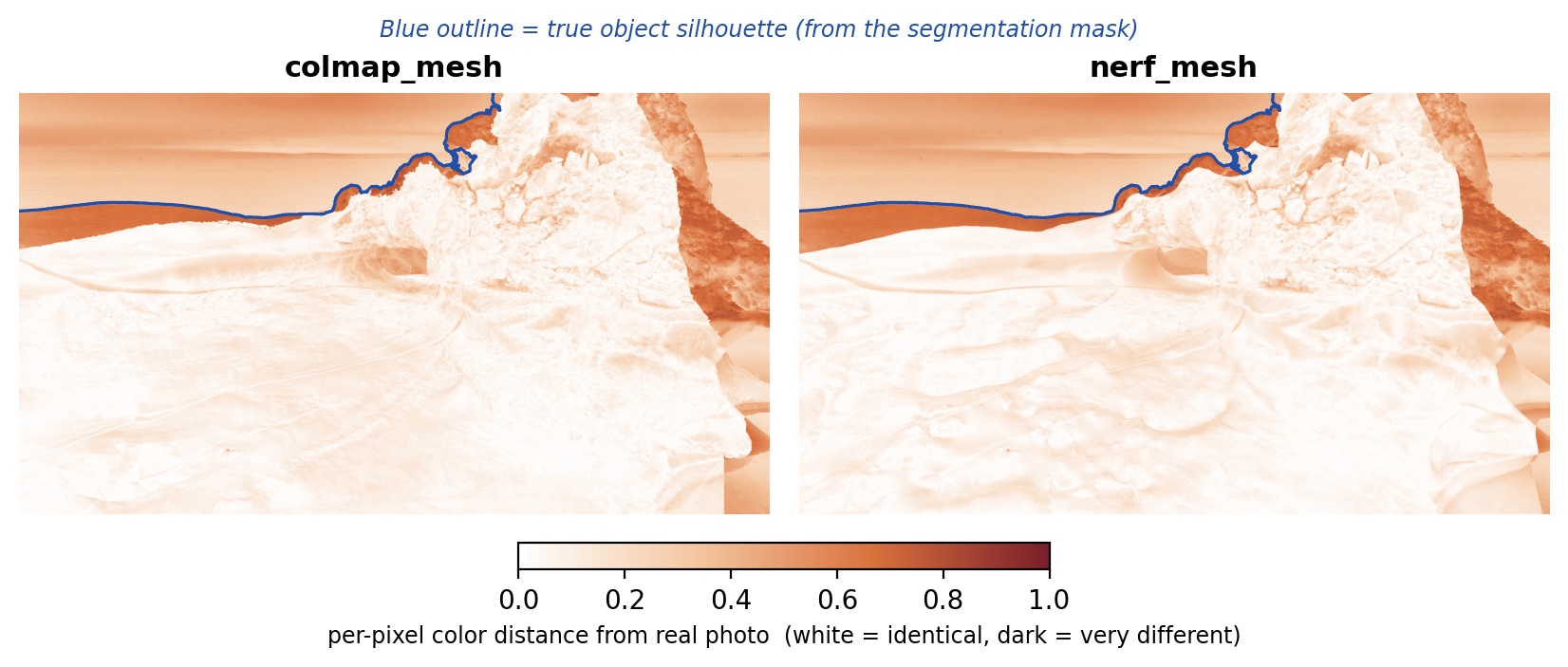
Iceberg drift and deterioration models run on rough size and shape estimates from satellite and aerial reconnaissance. This project reconstructs iceberg sails in 3D from consumer drone video using neural radiance fields (NeRF) and compares the results against traditional structure from motion (SfM) and multi-view stereo (MVS) photogrammetry. On two icebergs in Disko Bay, Greenland, NeRF gave higher structural similarity, more coherent meshes, and sail volumes within 2-10% of MVS, using an open-source pipeline on commercial off-the-shelf hardware. The work is a collaboration between URI, the University of Maryland, the University of Bergen, and the University of Washington Applied Physics Laboratory.
Research Products
- Paper: Neural Radiance Field Applications for Geometric Reconstruction of Arctic Icebergs OCEANS 2026 Monterey, McKenzie et al. (DOI pending)
- Code: Neural radiance field pipeline for iceberg reconstruction GitHub, L. McKenzie et al.
- Data: Disko Bay 2025 iceberg drift tracks International Arctic Buoy Programme
- Talk: NeRFBerg, Ocean Sciences Meeting 2026 Glasgow, ME43A-05
- Talk: Disko Bay Iceberg Drift and Shape Observations from a Small Vessel Ocean Sciences Meeting 2026, Smedsrud et al., HE33B-03
Media and Outreach
- Exhibition: Fragmented Reconstructions, with Mallory McPherson The Synergy Project, Studio Blue, URI Bay Campus, 2026
- AI-Generated Iceberg Models Could Help Sailors Navigate Arctic Waters Maryland Today, 2025
- Faculty Spotlight: AI for Ocean Science Applications URI Institute for AI and Computational Research, 2026